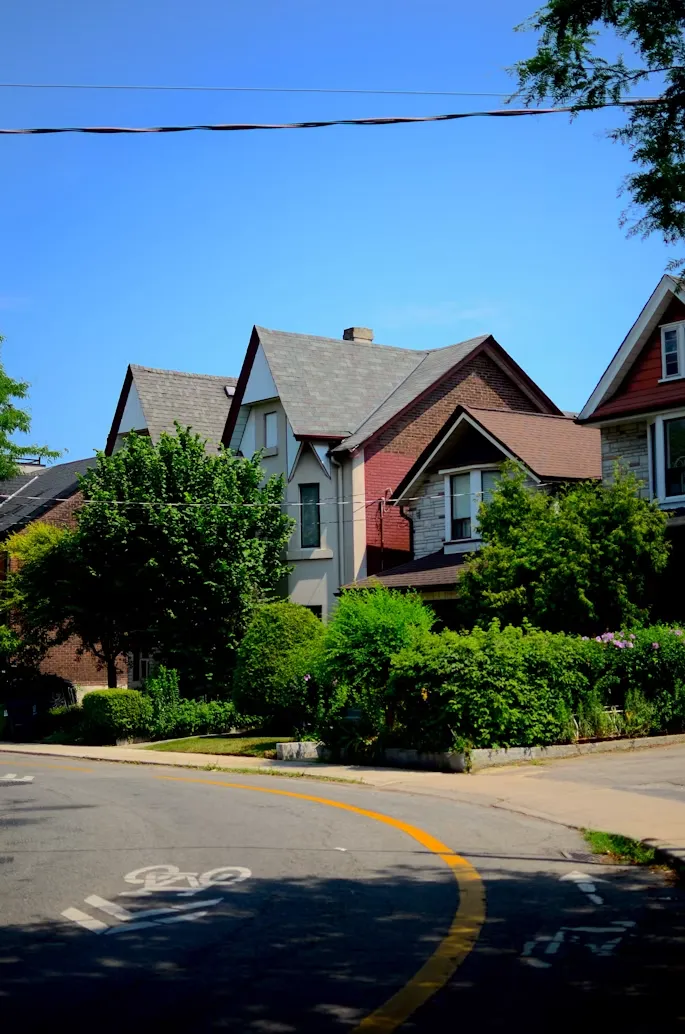
Moving to East York Toronto: Buyer & Investor Guide 2026
East York doesn't get the same attention as Leslieville, Riverdale, or the Beaches. That's part of what makes it worth a closer look. Lower entry prices, rents that hold their own against the rest of the city, and real transit investment already underway — this guide breaks down what the numbers actually say about buying or investing here in 2026.
What East York Costs
The average home in East York sold for $1,163,000 in March 2026. Broken down by property type: condos and lofts run $500,000 to $700,000, semi-detached homes $900,000 to $1.2 million, and detached homes $1.1 million to $1.6 million, with renovated properties at the higher end.
Homes here spend a median of 28 days on the market. That's a slower pace than the Beaches, where over half of listings sell in under 10 days.
Compare that to the Beaches, where the average home sold for $1,710,872 and current listings average $2,020,000. East York's average sits roughly 32% below the Beaches' sale price, and about 42% below its current asking prices. Condos tell a similar story: East York's $500,000-$700,000 range runs about 27% below the Beaches' $798,000-$855,000.
One number to watch: that $1,163,000 average blends very different pockets. Leaside, which sits inside East York's boundaries, is one of Toronto's most established and expensive addresses — mostly detached homes on generous lots, built in the 1930s and 40s, selling quickly and at a real premium. It's pulling the area average up. The math below is about the rest of East York, not Leaside.
Where the Math Works
Old East York, O'Connor-Parkview, and Pape Village are where the entry-cost case is strongest. This is freehold territory — lower-rise homes, a walkable retail corridor, and prices that sit well under what the same square footage costs in the Beaches.
Most of the rent range here sits at or below the Toronto average. One-bedroom units run $950 to $2,365 a month; the citywide average is about $2,200, so the top of that range approaches it while most of the range sits under it. Studios run $1,295 to $1,900. A lower purchase price against rent levels that hold up well is the core of the investor case here: it points toward stronger rental yield potential than a pricier neighbourhood offers, without needing to round up to a specific return number nobody's calculated yet.
Two-bedroom units span a wide range, from modest older stock to newer, higher-end builds. That range is worth knowing about going in — it means doing the legwork on a specific building or block matters more here than in a more uniform market.
Thorncliffe Park & Crescent Town
Thorncliffe Park and Crescent Town are part of East York, but they're a different kind of opportunity. Both are dense, established rental communities — Thorncliffe Park alone holds more than 6,000 apartment units across 30-plus buildings, one of Toronto's first planned post-war high-rise communities.
This is a multi-unit rental play, not a freehold appreciation story. Anyone looking at East York as an investment should know the two aren't interchangeable — the numbers, the tenant base, and the hold strategy all look different here than they do in Old East York.
Landmarks & Everyday Life
Pape Village is the walkable heart of the area — groceries, coffee, dinner, all within reach on foot. Move further into the residential interior toward O'Connor and it gets quieter and more car-dependent for anything beyond the essentials.
The Danforth corridor runs through East York's southern edge, carrying its GreekTown history along with newer additions: the Only Cafe, a 35-plus-year neighbourhood bar; the Wren, a tavern known for craft beer and comfort food; Simone's for Caribbean and Jamaican food; Square Boy, a diner that hasn't changed much since the 1960s; the Big Carrot for local and organic groceries; and the Cheese Emporium for European and Quebec cheese.
For green space, Stan Wadlow Park and Dieppe Park both have off-leash areas and walking paths, and Monarch Park adds a pool, an ice rink, a playground, and a community centre. The East York Civic Centre and Memorial Gardens, near Coxwell and Mortimer, mark the symbolic centre of the old borough.
Transit runs along Line 2, with stations at Pape, Donlands, Greenwood, and Coxwell bordering the area, plus Don Valley Parkway access from Don Mills and O'Connor. For families, that same walkability and park access is part of the draw — it's just not the headline here; the numbers are.
The Hold Thesis
Nothing major is under construction in East York itself right now.
The Ontario Line is being built with Pape Station as an interchange connecting to the existing Line 2, and East Harbour Station adding a GO Transit connection nearby. Tunnelling started in April 2026, with the full line expected to open by 2031 — a five-year horizon, not an immediate one, but a funded and active project rather than a proposal.
On the zoning side, the city approved a Missing Middle housing pilot at 72 Amroth Ave in the Beaches-East York area, exploring four-to-six-storey development on a site currently capped at four storeys. It's one pilot project, not an area-wide policy change — but it's a real precedent for more density here down the line.
Put together: the transit is being built, the zoning precedent exists, and the ground hasn't broken on major development in East York yet.
Buyer & Investor Takeaways
For an investor comparing entry cost against achievable rent, East York's numbers hold up well against pricier, faster-moving neighbourhoods nearby — with a funded transit project and a zoning precedent adding real, if longer-term, upside. For a buyer weighing where their budget goes furthest without leaving East Toronto, the answer depends on which East York: the freehold streets around Old East York and Pape Village, the rental-apartment density of Thorncliffe Park and Crescent Town, or Leaside's established premium. Old East York, Thorncliffe Park, and Leaside behave like three different markets, not one neighbourhood.
Frequently Asked Questions
Is East York cheaper than the Beaches?
Yes. East York's average home price sits roughly 32% below the Beaches' average sale price and about 42% below current Beaches listings. Condo pricing shows a similar gap of around 27%.
Is East York a good neighbourhood for rental investment?
Old East York and Pape Village offer a lower purchase price against rents that are in line with the Toronto average, which points toward stronger yield potential than pricier neighbourhoods. Thorncliffe Park and Crescent Town are a separate, higher-density rental market worth evaluating on their own terms.
What's driving future growth in East York?
The Ontario Line, with Pape Station as a new interchange and East Harbour Station nearby, is under construction with an expected 2031 completion. A Missing Middle housing pilot approved near the Beaches-East York border also signals room for more density in the years ahead.
What's the difference between Old East York and Thorncliffe Park?
Old East York is freehold, lower-rise, and walkable, centred around Pape Village. Thorncliffe Park is a dense, established rental-apartment community with more than 6,000 units. They serve different buyers and different investment strategies.
Is Leaside part of East York?
Yes, administratively — but Leaside is a distinct, premium market of detached homes on larger lots, priced well above the rest of East York. It's part of why the area's average price can be misleading without knowing which pocket you're looking at.
Book a Consult
This guide covered what East York costs, what it rents for, and what's coming for the different pockets that make up the area. Book a free 15-minute consult to talk through which one fits what you're looking for.